 admin@graminguru.in
Introduction
If you are a student planning higher education this year, you have probably heard that several new central universities in India 2025 are now accepting applications. This is genuinely exciting news — not just for students in big cities, but especially for those from smaller towns and rural areas who have struggled to access quality higher education close to home.
Central universities in India are funded and regulated directly by the central government through the University Grants Commission (UGC). That means they follow national standards, offer subsidized tuition, and provide degrees that are recognized all across the country.
This article walks you through everything — which universities are opening admissions, what courses they offer, how to apply, and what you should watch out for before submitting your application.
What Makes a Central University Different From Other Universities?
Before we get into the list, it helps to understand what you’re actually applying to.
A central university is established by an Act of Parliament. It receives its funding from the central government, not from a state government. This distinction matters a lot when it comes to tuition fees, faculty quality, and infrastructure.
Most central universities are required to reserve seats for students from different states, making them more diverse than local or private institutions. They also follow reservation policies as mandated by the Government of India — including categories for SC, ST, OBC, and EWS students.
For many families, the relatively low fees at these institutions make them the most practical route to a respected degree.
Why 2025 Is a Significant Year for Central University Admissions
The Indian government has been steadily expanding higher education access through the National Education Policy (NEP) 2020. Part of this effort includes setting up or upgrading universities in underserved regions.
Several of the new central universities in India 2025 have either recently completed their initial infrastructure phase or have received final UGC recognition, which means they are now eligible to enroll students in larger numbers.
This is not just about adding names to a list. It is about real institutions with real campuses, hired faculty, and functioning labs that are now ready to take in students.
7 New Central Universities in India Opening Admissions in 2025
1. Central University of Ladakh
Located in Leh, this university has been a long time coming for students in the Union Territory of Ladakh. It now offers undergraduate and postgraduate programs in humanities, science, and social sciences.
Admissions are conducted through the Central University Entrance Test (CUET), which is the standard gateway for most central universities. Students from Jammu & Kashmir and Ladakh are given additional preference in seat allocation.
2. Central University of Andhra Pradesh
Situated in Anantapur, this institution has expanded its course offerings significantly for the 2025 academic session. Programs in education, management, sciences, and arts are now open for application.
Students applying to the new central universities in India 2025 like this one should note that CUET scores are mandatory. The university also has a separate counseling round for PhD admissions.
3. Central University of Haryana
The Mahendragarh campus of Central University of Haryana has added new departments this year. Programs in environmental science, computer applications, and journalism are among the newly introduced ones.
This university has been particularly active in offering programs that align with industry demand, which is a practical benefit for students thinking about employability after graduation.
4. Central University of Kerala
Based in Kasaragod, this university has been growing its postgraduate program list steadily. In 2025, it is opening admissions in interdisciplinary programs including development studies and tribal studies — subjects that are rarely found in private universities.
It is worth noting that this is one of the new central universities in India 2025 that has put serious investment into its library and digital learning infrastructure.
5. Central University of Jharkhand
Located in Ranchi, this university serves a region where quality higher education options have historically been limited. Its 2025 admissions include programs in nanotechnology, water engineering, and indigenous studies — reflecting both modern demand and regional relevance.
The university follows a semester-based system and has been building research partnerships with national institutions.
6. Central University of Tamil Nadu
Based in Thiruvarur, this university offers programs in economics, English, mathematics, and South Asian studies. For students in coastal Tamil Nadu, this institution offers an affordable and academically strong option.
Among the new central universities in India 2025, this one has one of the more established placement cells, with connections to research organizations and civil service coaching programs.
7. Central University of Karnataka
Located in Kalaburagi, this university has finalized its 2025 admission calendar with programs in social exclusion studies, library science, and law. It particularly focuses on students from historically marginalized communities.
The campus has been actively developing hostel facilities, which matters a great deal for outstation students.
How to Apply: The CUET Process Explained
All seven of the new central universities in India 2025 mentioned above accept admissions primarily through CUET — the Common University Entrance Test. This exam is conducted by the National Testing Agency (NTA).
Here is the basic process:
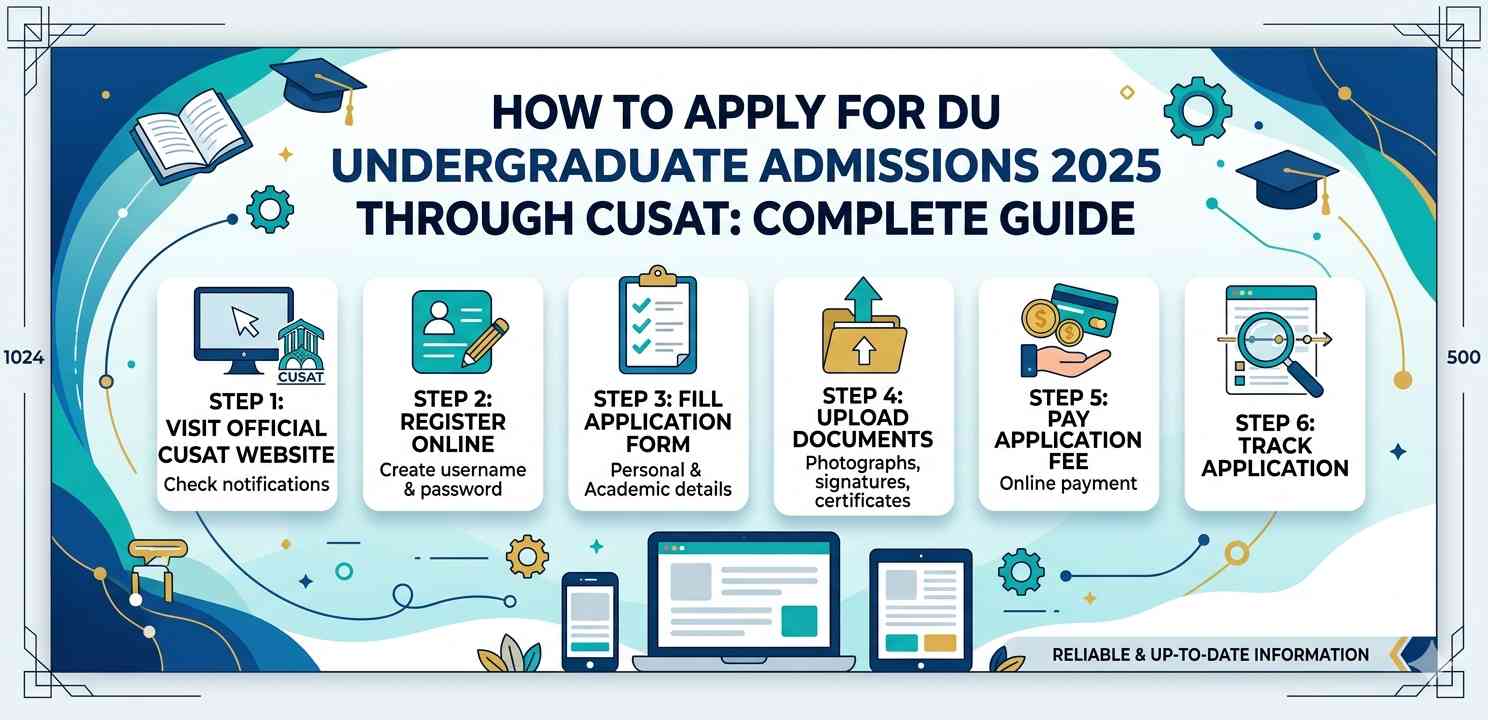
- Register on the official CUET portal (cuet.samarth.ac.in)
- Choose your preferred universities and programs during registration
- Appear for the exam, which has subject-specific and general tests
- Check individual university cut-offs after results are declared
- Participate in the counseling or merit-based seat allocation process
You can read the full CUET 2025 guidelines on the NTA official website for updated exam dates and syllabus.
Fees and Financial Aid at Central Universities
One of the most important reasons students prefer central universities is the fee structure. Compared to private deemed universities, annual tuition at central universities is significantly lower — often ranging from ₹5,000 to ₹25,000 per year depending on the program.
Additionally, the central government offers several scholarship programs for eligible students. The National Scholarship Portal (NSP) is the primary platform for applying to government-funded scholarships. Students from SC, ST, OBC, and economically weaker sections can apply for post-matric scholarships that cover tuition and sometimes living expenses.
For students taking loans, most nationalized banks offer education loans at subsidized interest rates specifically for admissions to UGC-recognized central universities.
What to Check Before You Apply
Not every university that calls itself “central” is fully operational yet. Some institutions are still functioning from temporary campuses. Before applying to any of the new central universities in India 2025, here is what you should verify:
- UGC recognition status: Check the UGC website to confirm the university is listed as a recognized institution.
- Campus infrastructure: Look at the university’s official website for photos of the actual campus, hostel facilities, and labs.
- Faculty strength: The UGC norms require a minimum faculty-to-student ratio. Check annual reports if available.
- Accreditation: If NAAC accreditation has been awarded, it gives you a good idea of the academic quality.
You can verify university recognition through the UGC official portal.
Internal Resources Worth Reading
If you are also exploring entrance exams alongside university applications, our guides on how to prepare for CUET 2025 and top government scholarships for college students in India can help you plan your next steps more clearly.
Common Questions Students Ask
Is CUET compulsory for all central universities?
For undergraduate and most postgraduate programs, yes. CUET has become the primary admission route for the majority of central universities in India. Some universities also have their own entrance tests for specific PhD or professional programs.
Can I apply to multiple new central universities with one CUET registration?
Yes. During CUET registration, you can list multiple universities and programs. There is no need to register separately for each university.
Are hostels available?
This varies by institution. Most of the new central universities in India 2025 have hostel facilities under construction or already functional. Always confirm directly with the university before assuming accommodation is available.
Final Conclusion
The expansion of central universities across India is a meaningful step toward more equitable access to higher education. The seven institutions covered here represent genuine opportunities for students who want a quality degree without the financial burden of private education.
The common thread across all of them is CUET — so if you have not registered for the entrance test yet, that is your most urgent task right now. Beyond that, spend time researching each campus individually rather than relying on rankings alone. The right university for you depends on your subject interests, location preferences, and career goals — not just on reputation.
Higher education in India is slowly but steadily reaching parts of the country that were left behind for decades. These universities are part of that shift, and 2025 is a good year to take advantage of it.