 admin@graminguru.in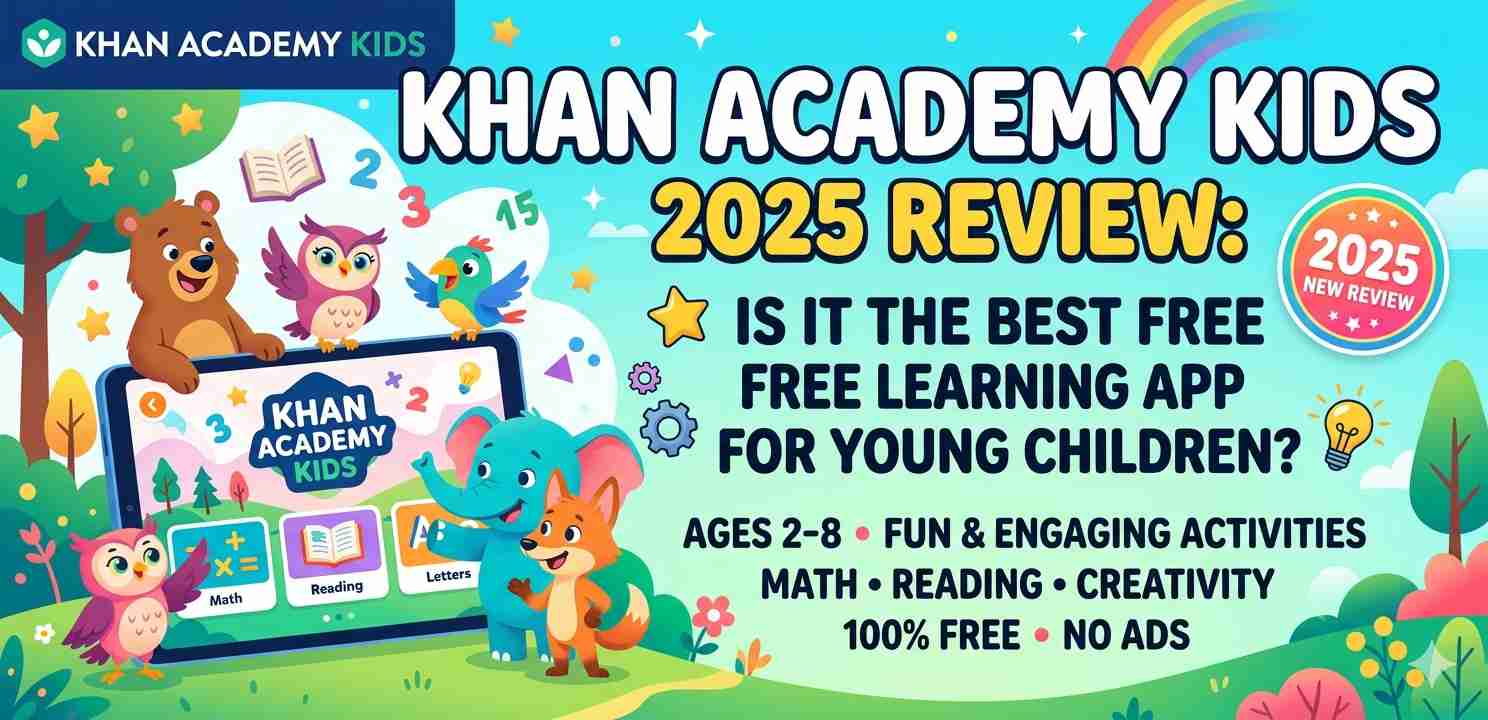
Introduction
Finding a good learning app for your child can feel overwhelming. There are dozens of options, and most of them either cost money, show annoying ads, or just don’t keep kids interested for long. That’s where Khan Academy Kids comes in. It’s a completely free, no-ads educational app designed specifically for children aged 2 to 8. In 2025, it continues to be one of the most talked-about learning tools for parents and educators alike.
But is it actually worth your child’s time? Let me walk you through what I personally noticed after spending time exploring the app — the features, the content quality, and whether it lives up to the hype.
What Is Khan Academy Kids?
Khan Academy Kids is a free mobile learning app developed by Khan Academy, the same nonprofit organization known for making quality education accessible to everyone. The kids’ version is built specifically for early learners — from toddlers to early elementary students.
The app is available on Android, iOS, and Amazon devices. Unlike many “free” apps, it doesn’t hide important content behind paywalls, and there are zero advertisements. That alone makes it stand out.
Who Is Khan Academy Kids Designed For?
The app officially targets children between 2 and 8 years old. But practically speaking, it works best for kids in the 3–6 age range. Younger toddlers might need parental guidance to navigate it, while kids aged 7–8 may find some sections a bit simple.
Khan Academy Kids divides its content by learning level — not strictly by age. So if your 5-year-old is advanced in reading but still developing in math, the app adjusts accordingly. This adaptive learning approach is one of its strongest features.
Core Subjects Covered
Reading and Language Arts
This is where Khan Academy Kids really shines. The reading section covers:
- Letter recognition and phonics
- Sight words and early vocabulary
- Simple sentence reading
- Listening comprehension through interactive stories
Children are guided by animated characters, and the stories are genuinely fun to go through. My observation is that kids stay engaged longer in this section compared to more rigid apps.
Math Skills
The math content in Khan Academy Kids is well-structured. It starts with basic number recognition and counting, then moves into addition, subtraction, and simple comparisons. Each concept is taught through games and visual activities — no boring worksheets.
Social-Emotional Learning (SEL)
This is something you don’t often see in kids’ learning apps. Khan Academy Kids includes short video series and interactive stories focused on emotions, empathy, and social situations. For young children who are still learning how to handle feelings and friendships, this section adds genuine value.
Science and the World Around Us
There are sections on basic science topics — animals, weather, plants, and the environment. The content isn’t deeply detailed, but for young learners, it sparks curiosity in a healthy way.
App Design and User Experience
One thing that becomes obvious quickly is how thoughtfully Khan Academy Kids has been designed for small children. Big, colorful buttons. Simple navigation. Voice instructions for kids who can’t read yet.
The main characters — Kodi the bear, Liza the deer, and their friends — guide children through activities. These characters aren’t just decorative; they give instructions, celebrate progress, and keep the tone warm and encouraging.
On Android devices, the app runs smoothly. Even on mid-range phones, loading times are fast and there’s no significant lag during activities.
Is Khan Academy Kids Truly Free?
Yes — and this deserves emphasis. Khan Academy Kids is completely free. No subscription. No premium tier. No in-app purchases. No ads.
Khan Academy is a nonprofit, and the app is funded through donations and grants. This means the people who made it aren’t trying to sell you anything. That’s a genuinely rare thing in the educational app space.
Khan Academy Kids vs Other Free Learning Apps
Let’s be honest — there are other free learning apps out there. Apps like PBS Kids, Starfall, and Google’s family apps all have educational value. But here’s where Khan Academy Kids tends to pull ahead:
- It covers more subjects in one place
- The adaptive learning system is more sophisticated
- There are no ads, unlike many free alternatives
- The SEL (social-emotional learning) content is unique
- Parent progress tracking is built in
That said, it’s not perfect. Some children prefer the animation style in apps like PBS Kids, and the older 7–8 age group may find the content less challenging over time.
Parent Dashboard and Progress Tracking
Khan Academy Kids includes a parent/caregiver section that shows how your child is progressing. You can see which activities were completed, how much time was spent, and which areas your child might need more practice in.
This feature is genuinely useful — not just a checkbox. It gives parents a clear picture without requiring them to sit through every activity with their child.
Offline Access
One feature worth mentioning: Khan Academy Kids allows some content to be used offline after initial download. This is helpful for travel or situations where internet access is limited. Not every section works offline, but the core activities do.
Things That Could Be Better
No honest review should skip the limitations. Here are a few areas where Khan Academy Kids has room to improve:
Content ceiling for older kids. By age 7 or 8, children may outgrow parts of the app. The content doesn’t stretch far enough for early readers who are already confident.
Limited customization for parents. You can’t manually set the learning level for your child. The app adapts on its own, which is mostly fine, but some parents prefer more control.
No live or interactive class features. Unlike some paid platforms, there’s no live tutoring or real-time interaction. It’s a self-guided experience.
Real-World Use: What Parents and Teachers Say
Teachers who use Khan Academy Kids in early childhood classrooms often recommend it as a supplement to structured learning. It’s not meant to replace teaching — it’s a support tool. Parents who use it regularly report that children actually ask to use the app, which is usually a good sign.
One common observation: children tend to stay focused for 15–20 minutes at a time on Khan Academy Kids, which is actually a healthy screen time window for young children.
Is Khan Academy Kids Safe for Children?
Safety is a reasonable concern for any digital platform used by young kids. Khan Academy Kids has no social features, no chat, no user-generated content, and no external links accessible to children. The app is COPPA-compliant (Children’s Online Privacy Protection Act), which means it meets strict US standards for collecting and protecting children’s data.
How to Download Khan Academy Kids in 2025
The app is available on:
- Google Play Store for Android devices
- Apple App Store for iPhones and iPads
- Amazon Appstore for Kindle Fire tablets
Just search “Khan Academy Kids” and download the official app. Setup takes a few minutes — you create a caregiver account, add your child’s profile, and the app places them at an appropriate starting level.
Final Conclusion
After looking at everything — content quality, design, safety, cost, and real-world use — Khan Academy Kids holds up very well in 2025. It’s one of the few apps in this category that genuinely delivers on its promise of free, high-quality early education. The adaptive learning, breadth of subjects, and complete absence of ads make it easy to recommend.
Is it perfect? No. Older kids in the 7–8 range will eventually need something more advanced. But for its core audience of 3–6 year olds, Khan Academy Kids remains one of the strongest options available — free or paid.